
Phosphate conversion coatings are applied to metals both as a final finish and as an intermediate layer for subsequent coatings.
They are used to:
- Provide corrosion resistance
- Improve adhesion of paints and other organic finishes
- Facilitate cold forming operations such as drawing and extrusion
- Modify surface friction characteristics to ease sliding and movement
GENERAL INFORMATION
At first glance, zinc and manganese phosphate layers may appear equivalent when considered as non-metallic crystalline separating layers, but there are significant differences.
MANGANESE PHOSPHATING, compared to zinc phosphating, is characterized by a stronger etching action. This results in deeper penetration of the phosphate layer into the metallic substrate, providing higher wear resistance. The manganese phosphating process improves performance during the running-in phase of mechanical parts, increasing the transmittable power and reducing noise.
During the running-in process, it is the coating that becomes polished through the mutual sliding of the mating surfaces. This ensures the initial adaptation necessary for the proper functioning of any mechanism, at the expense of the coating rather than the base metal. Moreover, practical experience has shown that, regarding the limit load for seizure, manganese phosphating is the preferred method for reducing wear in sliding friction conditions.
PHOSPHATE CONVERSION TREATMENTS by themselves provide only short-term corrosion protection. To achieve more effective protection, suitable additional treatments are required, depending on the intended use of the phosphated surface — for example, with the application of protective oils or waxes. The phosphate layer, firmly anchored to the base metal, absorbs lubricant and retains it effectively thanks to its absorbent properties. Such post-treatments should preferably be carried out on phosphated components immediately after treatment to prevent the onset of corrosion.
2 – APPLICATION METHODS
Phosphate conversion coatings are produced by immersion in baths containing the appropriate solutions, with continuous agitation. During processing, the bath becomes enriched with iron, which results in the deposition of a mixed iron/manganese or iron/zinc layer on the surface. The presence of iron, in addition to influencing the chemical conversion of the phosphate layer, also affects the initial rate of attack on the base metal and the nucleation of the crystals. The chemical attack on the base metal, necessary to form the phosphate conversion layer, mainly occurs on the micro-roughnesses created by mechanical processing, so that the material simultaneously acquires both the coating and an improved surface finish.
3 – PHOSPHATE LAYER THICKNESS
It is not possible to establish in advance a minimum or maximum limit for the thickness and weight of the phosphate layer, as these vary depending on:
- the material of the part and its surface condition
- previous mechanical and chemical treatments
- the operating conditions of the phosphating process
The company standard specifies a thickness not less than 3 microns and not greater than 6 microns, unless otherwise required by the customer. In this case, the tolerance for the specified thickness is ±2 microns.
THE THICKNESS IS DETERMINED BY THE MAGNETIC METHOD ACCORDING TO UNI ISO 2178.
The coating weight, expressed in mg/dm², divided by the factor 1.4, approximately corresponds to its thickness in microns as measured by the magnetic method. When designing the part, it must be considered that the phosphate deposit forms partly at the expense of the base metal and that, for a fraction varying between ½ and ⅔ of the layer thickness, it protrudes beyond the original dimensions of the part.
4 – APPEARANCE OF THE PHOSPHATE LAYER
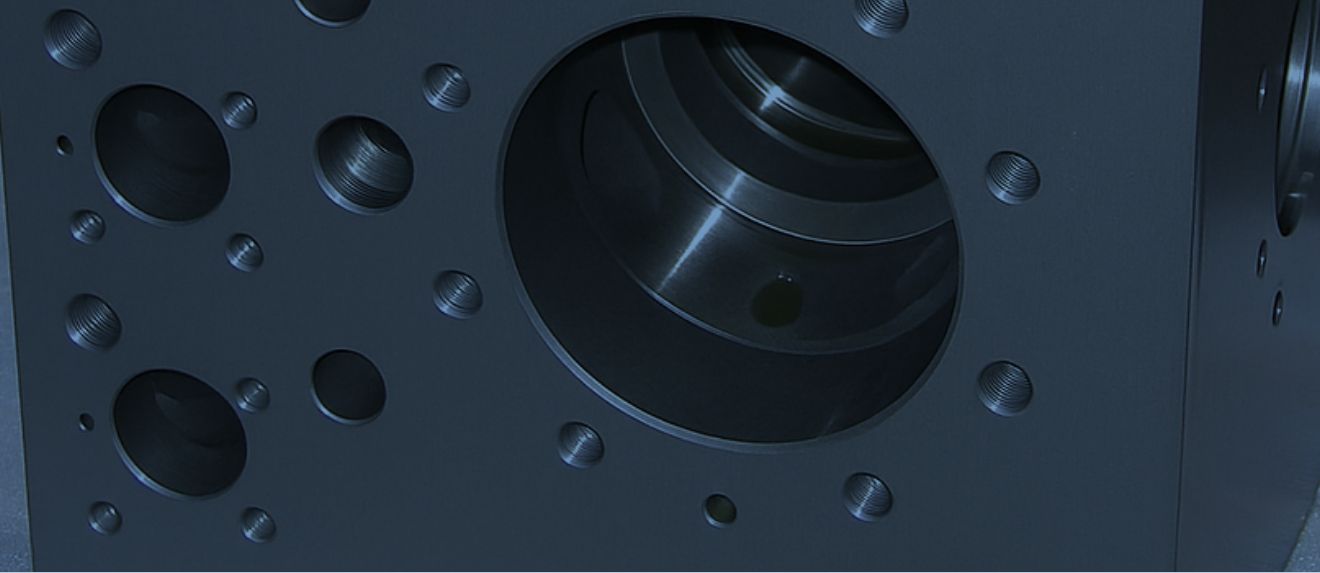
The phosphate layer should have a uniformly velvety appearance, with color ranging from gray to black. Minor color variations within a single part, within the limits indicated above, are not grounds for rejection.
The layer must have a microcrystalline prismatic structure with rounded edges, compact, uniform, and free from stains, uncoated areas, scratches, dust, or powdery residues.
Minor variations in appearance due to surface irregularities of the base metal or contact with supports during phosphating are common and are not normally indicative of significant quality variations. Layers consisting of large crystals surrounded by much smaller ones must be excluded. After the removal of the oil film, the phosphate layer must not show yellow-ochre dust (which indicates sludge in the phosphating bath).
5 – CONTINUITY OF THE PHOSPHATE LAYER
By their nature, phosphate layers are porous; however, excessive porosity can compromise the coating’s effectiveness. The continuity of the coating can be verified by salt spray tests according to UNI ISO 9227.
The exposure time, for parts free of oils or other protective substances, must be agreed upon directly between the customer and the supplier.
6 – POST-PHOSPHATING TREATMENTS
All phosphate conversion coatings are inherently porous but can be effectively sealed through suitable post-treatments.
Phosphate layers themselves do not have self-lubricating properties, which are essential in sophisticated applications such as electronics, chemical, or aerospace industries, or in cases where traditional lubrication is not feasible. In this field, the company has developed its expertise through the following post-phosphating processes:
- MOLYKOTE®: lubricating coating with molybdenum disulfide (on manganese phosphate layer)
- ENDURION: inorganic sealing with tin salts (on zinc phosphate layer)
- MOLIDAG: solid lubricant for cold forming (on zinc phosphate layer)
- BLACK-TECH®: thermosetting lubricant based on polytetrafluoroethylene (PTFE) on zinc phosphate layer
These treatments provide optimal results in terms of smoothness, wear resistance, and self-lubrication.