

It is a chemical (non-electrolytic) treatment, defined as an inorganic post-phosphating sealant, carried out on parts that have been previously zinc-phosphated.
The purpose of this treatment is to seal the typical capillaries and microcracks of the phosphated surface, eliminating roughness and microfractures. This results in significantly improved smoothness, wear resistance, and a reduced risk of mechanical damage to the base metal, such as scratches or pits.
As is well known, scratches and small cavities in the metal act as anodic areas, since corrosion inhibitors cannot easily reach them; consequently, the corrosive process begins and spreads within the metal’s microfissures.
A smooth, undamaged metal surface provides better corrosion resistance.
Moreover, since the sealed phosphate layer is essentially non-conductive, it acts as an insulator, protecting the metal from electrochemical corrosion.
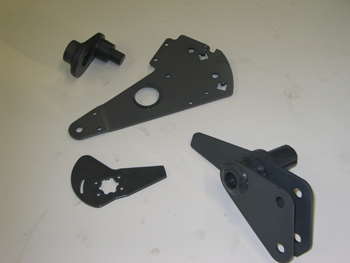
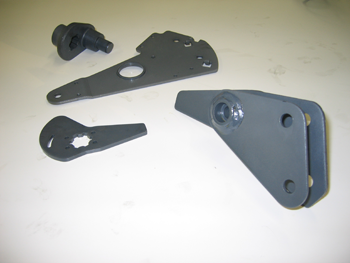
DESCRIPTION
The treatment consists of a heavy zinc phosphate coating in accordance with BSI BRITISH STANDARD 3189, composed of a microcrystalline layer of zinc and iron phosphates with a thickness of 6–8 microns.
When designing the part, it must be taken into account that the phosphate deposit forms partly at the expense of the base metal and that, for a variable fraction between ½ and ⅔ of the layer thickness, it projects beyond the original dimensions of the part.
After phosphating, the Endurion treatment is carried out. The process is performed by immersion in a tin salt solution, according to the times and methods prescribed by the approved process cycle.
TESTS AND INSPECTIONS
THICKNESS
Thickness is measured by the magnetic method according to UNI ISO 2178. The total coating thickness (including the phosphate layer) must not be less than 8 microns, measured on the number of pieces specified by the procedures, depending on the batch size.
ADHESION
Adhesion is tested according to UNI ISO 2819.
When rubbing the coating in accordance with the standard methods, no flaking or detachment of the deposit shall occur.
VISUAL APPEARANCE
The treated parts must have a uniform appearance, free from color variations or powdery deposits.
CORROSION TESTS
The test consists of exposing the parts to a salt spray in accordance with UNI ISO 9227.
Visible rust spots, detectable to the naked eye at normal reading distance, must not appear before 200 hours of exposure.
REFERENCE STANDARDS: UNI ISO 2178 / 2819 / 9227 BSI BRITISH STANDARD 3189